
 Cart is empty
Black & White or Color
1. What does lux mean and is it really important?
2. Why do color and black and white cameras have different lux ratings?
3. What is a "dual imaging" camera and what are its advantages & potential drawbacks?
4. Why won't color work as well in low light situations?
5. Will color cameras work with infrared light assistance?
6. Which is usually recommended for general and/or covert surveillance purposes?
Q1: I've seen "5 lux",
"0.5 lux", "0.0003 lux" - what does it all
mean to me?
A1:
Here's where THEORETICAL vs. PRACTICAL SCIENCE can be of utmost
importance. A camera's true light
rating (or lux
factor) is kind of an elusive specification that will generally
get you into trouble when shopping specs- because so many of them
sound so great "on paper" but don't necessarily work
as well in the "real world". The spec generally depends
on amount of light present when it was figured. Note: This is
often the MOST exaggerated number you'll see. Generally speaking,
however, the lower the lux rating a camera has, the better it
can "see"- or produce an image- in darker places. In
certain situations, "low-light" cameras can "see"
even better than human beings-provided theyhave enough light that
they can utilize an internal auto
gain circuit which boosts the available light available. For
"extreme low-light" situations- or ones that may become
so, it is usually recommended to use our new black
and white Sony Ex-view CCD
cameras with the super low 0.0003 lux rating. No camera ever made
can image a picture in complete darkness- it's impossible! For
situations with NO light present, you'll need some type of extra
illumination present, whether visible or Infrared.
Camera lux specs (accurate or not) are generally based on use
with a "board"
lens rather than a pinhole
lens. This larger lens- often about the diameter of a dime,
allows more light to get inside to the CCD imager.
Since our newest upgrade to the newest color
Sony SuperHAD and Ex-view imagers, those rules may as well be
re-written because they no longer make any logical sense. Just
what do you say when 0.5 lux COLOR cameras are beating 0.05 lux
rated black and white units for visual definition and low light
imaging ability?! QUIT GETTING SO WRAPPED UP IN NUMBERS, FOLKS.
We've seen multiple revisions of cameras in which the lux and
resolution "specs" haven't changed at all- but the performance
sure has. We don't even deal in the last Sony revision chipset
because the new one is 'night and day' better- the difference
instantly distinguishable. Back
to top-->
Q2: Why do color and black
and white cameras have different lux ratings?
A2: Because of the ways that the technologies operate. Black and white is only trying to distinguish between light and dark, generally making it 'easier' for the image sensor to convert images into different shades of gray. Color imagers are attempting to image the true colors which may not be as visible to imager (during low light/ low-lux conditions) as those colors reside within our visible spectrum. And while our newest high resolution micro board and bullet color cameras produce excellent pictures when adequate light is present (best specs available for micro cams). For most of what you'll sadly find with the competition out there, anything less than very well-lit conditions will produce a visible graininess which may quickly dim to black even when the human eye is still imaging well. Our latest color cameras actually see BETTER than even the sharpest human eye in low light conditions. Of course- our newest black & white Ex-view cameras will see in the VERY LOWEST light possible. Back to top-->
Q3: What is a dual imaging
chipset and what are its advantages and potential drawbacks?
A3:
A 'dual- imaging' chipset is so named for its ability to automatically
revert from imaging in color
to black
and white when encountering lower lighting conditions. This
technology is a breakthrough as many want color in well-lit conditions,
but also require lower light to pitch dark conditions- where most
color cameras may either appear grainy or may not image at all.
Rather than having to switch between two separate cameras for
alternating light conditions, a dual imager allows the same camera
to view in color when lighting is adequate, but switch to monochrome
/ black and white when light falls below that required for adequate
color imaging.
This is also key for use with external / auxiliary Infrared (IR) spotlights and illuminators for use in conditions
ranging from well-lit in daytime to pitch black (or zero lux)
at night. We currently offer 3 cameras with this color to monochrome
(or 'day night' circuitry) technology- our #CC-X2
covert pinhole board camera and our weatherproof #IR-5HAD
or #IR-5EX,
with over 45' of infrared illumination (in monochrome only since
color DOES NOT WORK with infrared assisted illumination).
However, 2 things must be mentioned about this technology. One
drawback to the dual imager is that it tends to revert from color
to black & white / monochrome mode in conditions where the
color-only cameras would still be producing a very vivid color.
Also- we like our new color-only cameras as well as the monochrome
picture offered with the CC-X2HAD. So, any more- we only recommend
the dual cams for uses where Infrared illumination is required.
Back
to top-->
Q4: Why won't color work
as well in low
light situations?
A4: For the reasons mentioned above in question 2. Back to top-->
Q5: Will color work with
Infrared light assistance?
A5: No- the nature of the way colors are imaged doesn't allow it. Only black and white (monochrome) CCD imaging can be combined successfully with Infrared lighting. Any time you see or hear the words "color" and "Infrared" in the same camera, it must either have two separate cameras OR incorporate the new "dual" imaging chipset technology where the color imager automatically reverts to monochrome / BW when lux falls below a certain threshold (i.e. our #CC-X2, IR-5EX, & IR-5HAD). Back to top-->
Q6: Which is usually recommended
for general and/or covert surveillance purposes?
A6: Black and white cameras have typically been recommended for general covert surveillance purposes since they tend to feature both higher resolution and lower lux ratings (light requirements). When gathering what may turn out to be critical evidence- it could be that extra bit of difference that makes all the difference. However, it is important to note that high resolution and actual low lux imaging found in our newest color cameras are BREAKING DOWN the barriers of the past. The latest upgrades to Sony's color SuperHAD and Ex-View chipset imagers are bringing sharp color viewing to environments once reserved ONLY for black and white. The newest generation of Sony 1/3" CCD image sensors actually OUTPERFORM most of the competition's black and white cameras, as crazy as that claim may sound. Back to top-->
 Help
Help Your cart
 Authentication
News
Authentication
News
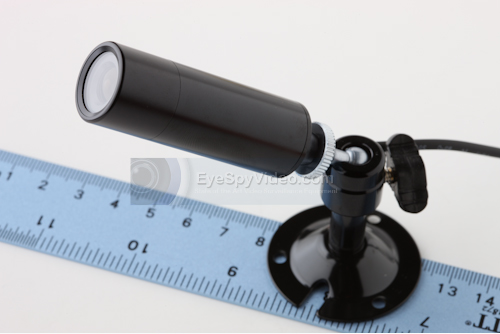
- The new CC-5XDWDR Color Weatherproof Bullet Camera has incredibly clear 700 TV lines of resolution, Digital Wide Dynamic Range and 2D Digital Noise Reduction.
- The wide dynamic range (WDR) function of a camera is intended to provide clear images even under extreme light circumstances where intensity of illumination can vary excessively, namely when there are both very bright and very dark areas simultaneously in the field of view of the camera. WDR enables the capture and display of both bright and dark areas in the same frame, in a way that there are details in both areas, i.e. bright areas are not saturated, and dark areas are not too dark. It also offers amazing low light capability.
- Digital Noise refers to the random dot pattern that is superimposed on the picture as a result of electronic noise; the 'snow' that is similar to what can be seen with poor (analog) television reception or on VHS tapes. The Digital Noise Reduction feature reduces that "noise" from the cctv camera image.
- This is the best bullet camera we have seen in terms of performance.
- If you are installing a new system or upgrading an existing one this would be the best choice. It is cutting edge so you won't have to worry about having out-dated equipment 6 months from now.
- Feel free to call us at 800-568-9291 for more information.
Previous news