
 Cart is empty
CCTV Basics
1. What do I need to get started?
2. What is the difference between "wireless" and "wired" cameras or systems?
3. How do I record what the camera "sees"?
4. What kind of run time can I expect from portable battery power?
5. I have an extra vcr or television at home- will it work with your equipment?
6. What is the difference between performance of your pinhole cameras vs. a camcorder?
7. Can I plug one of your cameras into my computer for watching and/ or recording?
8. Are there any special precautions I'll need to take with this equipment?
Q1: What do I need to get started?
A1: Well, it all depends on what you're trying to accomplish. Each situation is subject to a lot of different variable factors which will determine which camera, recorder, transmitter, etc. suits best. For instance, do you want to capture black & white or color? Indoors or outside? What kind of "run time" do you require? Does the weight or size matter? There are a wide variety of features available out there and one can tend to get carried away quite quickly. However, for practical purposes- figure you'll at least need a camera and a device on which you can monitor and/ or record what the camera is imaging (i.e. tv or vcr). Depending on situation, you may want or need to limit your decision based on expected lighting conditions, movement/ portability, weather/ outdoor environment situations and often, so much more. Is your application covert, low profile- or do you want to create a strong visual deterrent? Take a little time to check into our products- they're the finest you'll find. Our expectations of quality greatly surpass competitors in this same field. Please remember, just because something looks the same- does it really mean it is? And, if you still have more questions- we'll be happy to help. Back to top-->
Q2: What is the difference between "wireless" and "wired" cameras or systems?
A2: Well, we should begin by saying that the term wireless doesn't actually mean that the equipment has NO wires at all- though many of our systems have no visible wiring. To get a camera signal (or the picture it's imaging) to a monitor or DVR, there are really only 2 ways to go- wired or wireless. "Wired" means that the camera is physically plugged into the monitor, quad processor or DVR itself. "Wireless" means that the camera is plugged into (or integrated with) a wireless video transmitter which sends or 'beams' the signal to its corresponding receiver. For more information and answers to frequently asked questions about wireless products, click here. Back to top-->
Q3: How do I record what the camera "sees"?
A3: Almost any of our cameras or wireless receivers will interface with any video recorder, although simple plug adapters may be necessary. For example, our IR-5HAD30 has a "BNC" type plug which is designed for use with coaxial cable. With a BNC to RCA adapter plug (included) on the camera, you may run an RCA extension cable. And while it may be hard to understand at first, no covert video camera available at this time has the ability to store real time images onto itself. You must use some type of recording device to store the video. Of course, we carry a complete line of the latest high resolution and specialized digital DVR recorders. Back to top-->
Q4: What kind of run time can I expect from portable battery power?
A4: It depends on what equipment you're running and what kind of power source you're using. Even though most of our CCD cameras will use a 9 volt battery, the run time will be VERY LOW (about 30-45 minutes before voltage falls too low to give the camera adequate power). However, if you use our BAT-1 battery pack with 8 fresh AA alkalines- it can power one of our pinhole cameras for over 24 hours. Connecting additional equipment, like a # THX-9100, to the same battery pack (with a Y power adapter) will run both camera and transmitter for about 8-12 hours. Adding a microphone will affect run time only very slightly as its current requirements are only about 1/10 that of a camera or transmitter.
Use our BAT-AAA battery packs to supply up to 12 hours or so for a pinhole camera and 4-7 for most camera and transmitter combinations. For more information about powering your equipment- including by automotive voltage- please click here to see our FAQ answer page about it.
Back to top-->
Q5: I have an extra vcr or television at home- will it work with your equipment?
A5: Almost any tv or vcr will work with any of our equipment. 99% of any consumer video recorder made has audio-video (or A/V) input jacks. These easy to spot round holes are usually white and yellow and configured for "RCA" (a.k.a. "phono") plugs. Any of our cameras or wireless receivers will plug directly into those ports.
Older TVs may be a little trickier but it should still work, even on old dial knob models. You must first determine what kind of input(s) are available. If it's just a singular post-type antenna connection (referred to as "F" connector) there are F to RCA/ phono converters available at stores like Radio Shack, etc. for just a couple dollars. Then just turn dial to channel 3 (or sometimes ch. 4 if unit has an external switch for 3/4). Some portable and handheld models do NOT feature external inputs of any kind and are therefore unable to view a signal from a camera, vcr, or wireless receiver.
Back to top-->
Q6: What is the difference between performance of your pinhole cameras vs. a camcorder?
A6: They each have their pros and cons, but one of the key differences (besides the obvious 100 times smaller lens!) is the fact that our covert pinhole cameras are always in focus to infinity- objects and people just get smaller as they get farther away. Camcorders are typically "vari-focal", like most CCTV security cameras- and need to be focused for a given range, leaving everything else generally blurry or distorted. Again, high quality CCD pinhole cameras focus everything in view at all ranges. It's really quite amazing and offers a tremendous advantage in both cost and coverage in typically unmanned situations. Pan, tilt, zoom cameras are great but they are also require someone present to work the controls! Back to top-->
Q7: Can I plug one of your cameras into my computer for watching and/ or recording?
A7: Our cameras produce composite video for use with standard monitoring and recording equipment. Therefore, the cameras are not designed for plug and play use with most home computers. Doing so requires a special PCI video recording cord or other video capture device. If you have the proper video card, supporting standard composite video input(s), and recording software, it is possible to connect our cameras to your computer. However, the performance of your computer AND the performance of the video recording are likely to be degraded. Using a standalone DVR digital video recorder solely made to record video is much more consistent and reliable. Back to top-->
Q8: Are there any special precautions I'll need to take with this equipment?
A8: As with any delicate electronic components, the circuitry always needs to be protected from dust and dirt, liquids and moisture (including condensation), overheating and incorrect power (i.e. overvoltage and reverse polarity). So, if you intend to use a camera outdoors, you must take extra precautions to protect it. Weatherproof cameras are always recommended in outdoor conditions- though you can take cameras outside in nice conditions, if using reasonable care. Back to top-->
 Help
Help Your cart
 Authentication
News
Authentication
News
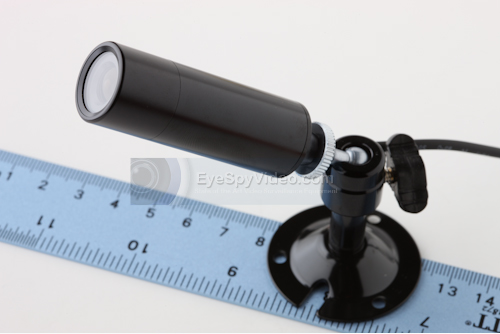
- The new CC-5XDWDR Color Weatherproof Bullet Camera has incredibly clear 700 TV lines of resolution, Digital Wide Dynamic Range and 2D Digital Noise Reduction.
- The wide dynamic range (WDR) function of a camera is intended to provide clear images even under extreme light circumstances where intensity of illumination can vary excessively, namely when there are both very bright and very dark areas simultaneously in the field of view of the camera. WDR enables the capture and display of both bright and dark areas in the same frame, in a way that there are details in both areas, i.e. bright areas are not saturated, and dark areas are not too dark. It also offers amazing low light capability.
- Digital Noise refers to the random dot pattern that is superimposed on the picture as a result of electronic noise; the 'snow' that is similar to what can be seen with poor (analog) television reception or on VHS tapes. The Digital Noise Reduction feature reduces that "noise" from the cctv camera image.
- This is the best bullet camera we have seen in terms of performance.
- If you are installing a new system or upgrading an existing one this would be the best choice. It is cutting edge so you won't have to worry about having out-dated equipment 6 months from now.
- Feel free to call us at 800-568-9291 for more information.
Previous news